U.S. authorized Cardio Slim Tea retailerHerbal tea · 60 g pouchFree shipping on 6 pouches60-day money-back
Order now

Blog

How to Read Weight Loss Tea Ads Calmly and Fairly

Quick answer

Read a weight loss tea ad by separating story from proof. Testimonials, a friendly doctor character, a ticking clock and a giant review count are sales tools, not evidence (FTC - Health Products Compliance Guidance). Look instead for a published study with a control group, a printed ingredient amount and a named maker. The Cardio Slim Tea sales story offers none of those (Cardio Slim Tea sales page).

Written by the Cardio Slim Tea reading deskUpdated · 8 min read

Neat rows of green tea bushes on a hillside plantation in warm light
A tea plantation. Real tea farms are calm places; the ads selling tea blends are often anything but.

Start here

What is an advertorial?

An advertorial is an ad dressed up as a news story or personal blog. It reads like journalism, but every line is there to sell.

Weight loss tea ads often use this format. A narrator tells a moving story, an expert shares a secret, and a product appears at the bottom.

We sell Cardio Slim Tea, and its own sales page is an advertorial (Cardio Slim Tea sales page). We use it as the example because it is the one we know best. Treating it fairly means saying what it shows and what it does not.

The example

What does the Cardio Slim Tea sales story claim?

The sales page tells a story about a long-forgotten Costa Rican tea tradition and a man who lost 167 pounds. It reports big group results, but it cites no published study for any of them (Cardio Slim Tea sales page).

Claims in the sales story and what is missing
What the story saysWhat a reader would need to check itShown?
A doctor character developed a tea from an old traditionA real, named physician with a license you can look upNo
Volunteers dropped about 20 points systolic and 10 diastolic on averageA published study, group size and a comparison groupNo
Volunteers lost about 31 pounds on averageStudy length, diet details and a control groupNo
Some people came off prescription medicinesMedical records and doctor supervisionNo
A very large number of reviewsReviews you can read, from verified buyersNo

The narrator also says he is not a doctor. The medical-sounding parts come from a character, not a study you can read.

Side by side

How does the sales story compare with the evidence?

Line up each claim with the research on the named herbs, and the gap is wide. Hibiscus has modest blood pressure research. Weight loss evidence for tea is weak.

  1. Sales page headline'Long-forgotten Costa Rican tradition helped me melt 167 lbs'One person's story. No study, no photos we can verify.
  2. Volunteer group'An average drop of 20 points systolic'No published study, no control group, no sample size. Hibiscus trials average about 7.
  3. Weight'Average loss of 31 pounds'No published study. Weight-loss supplements show little evidence of working.
  4. MedicinesSays people stopped their prescriptionsNever stop blood pressure medicine without your doctor.
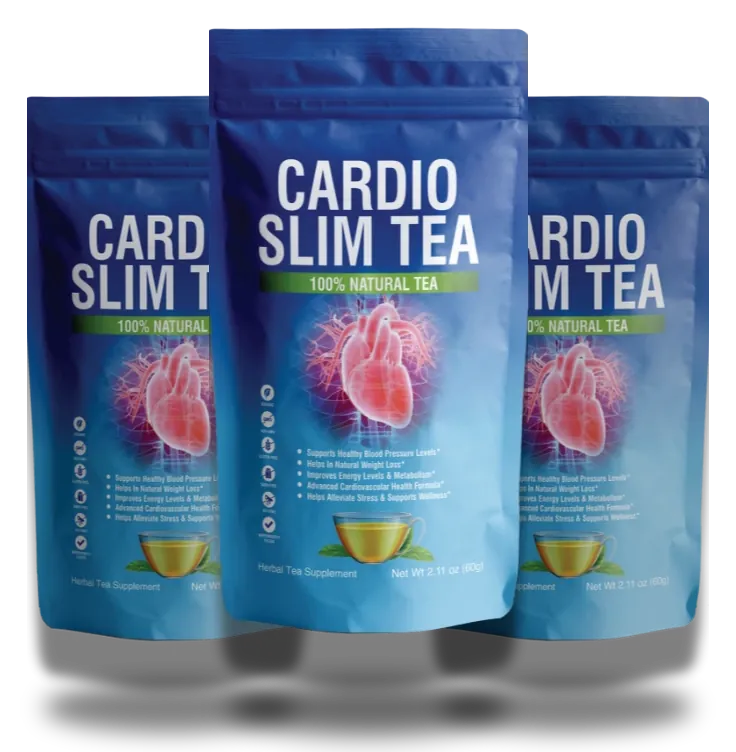
  5. Pouch frontFive claims, each with the FDA asteriskStructure/function wording, legally allowed with the FDA statement.

Sources: the sales page (Cardio Slim Tea sales page), hibiscus trials (Ellis 2021 - Hibiscus BP meta-analysis), NIH on weight-loss supplements (NIH ODS - Weight-loss supplements), the AHA on blood pressure medicine (AHA - Types of BP medications). In 2021 the FDA warned a tea seller that blood pressure claims make a tea an unapproved drug (FDA warning letter - TeaTaze (BP claims)).

Our benefits page goes through each pouch claim with its evidence.

Stories vs studies

Why are testimonials not evidence?

A testimonial tells you one person's story, not what will happen to you. Even a true one cannot show cause.

The Federal Trade Commission is blunt about this. It says health claims need competent and reliable science, usually randomized human trials. It says personal stories are never enough proof on their own (FTC - Health Products Compliance Guidance).

The FTC also says that a story showing results far better than typical is likely misleading. Adding "results not typical" in small print does not fix it (FTC - Health Products Compliance Guidance).

  • People who change diet, walk more and drink tea cannot tell which habit helped.
  • Blood pressure readings rise and fall from day to day on their own.
  • Ads pick the best stories and leave out everyone else.

Review counts

How can you spot fake reviews in tea ads?

Be wary when reviews all sound alike, use stock-looking faces, or come with a huge number you cannot browse. Those are common signs of made-up praise.

Since 2024, a federal rule bans fake reviews and testimonials. That includes reviews written by AI, reviews from people who do not exist, and reviews from insiders who do not say so. Buying reviews that must be positive is banned too (FTC - Fake reviews final rule).

Check whether you can read the reviews yourself and see bad ones. A count with no reviews behind it is just a number.

We have no verified customer reviews of Cardio Slim Tea to show yet, so our reviews page stays empty rather than filled with sample praise.

Cardio Slim Tea: from $49 a pouch60 g herbal tea · 2, 3 or 6 pouches · 60-day money-back guarantee

See packs

Pressure points

What other sales tactics show up in tea ads?

Four tactics come up again and again.

Authority

The doctor character

A friendly expert with a first name and a white coat. If you cannot find a license, a clinic or a published paper, treat the character as part of the story.

Urgency

"While stocks last"

Countdown clocks and low-stock warnings push quick decisions. A real offer is usually still there tomorrow.

Anchoring

Crossed-out prices

A high "was" price makes the real price look like a steal. Judge the price you actually pay.

Missing data

Studies you cannot read

"Volunteers saw results" means little without a paper, a group size and a control group. If it was never published, nobody can check it.

For the real prices, our pricing page lists each pack. On the 6-pouch pack, the sales page says about $1.3 a day, while its own price of $294 over about 180 days works out nearer $1.63.

The rules

What do regulators say about blood pressure claims on tea?

The FDA treats a claim to treat or prevent a disease as a drug claim. A tea making that claim without approval breaks the rules (FDA - Q&A on dietary supplements).

In 2021, the FDA sent a warning letter to a tea seller. It cited claims that hibiscus was a proven blood pressure reducer, that dandelion root moderates blood pressure, and that green tea lowers cholesterol. The FDA said those claims made the teas unapproved new drugs (FDA warning letter - TeaTaze (BP claims)).

Supplements may make gentler structure and function claims, like "supports healthy blood pressure levels." Those need a printed note saying the FDA has not evaluated them (21 CFR 101.93 - Structure/function claims). The Cardio Slim Tea pouch uses that kind of wording, with the asterisk.

Keep taking prescribed medicine

No tea ad is a reason to stop or change a blood pressure medicine. Talk with your healthcare professional first (AHA - Types of BP medications).

Before you buy

What should you check before ordering any weight loss tea?

Five quick checks work on any product.

  1. Find the maker

    A real company name and address on the label or site.

  2. Look for amounts

    A Supplement Facts panel with what is in each serving.

  3. Ask for the study

    A published trial on the product itself, not just one herb.

  4. Read the refund terms

    Days allowed, who pays shipping, and whether opened packs count. Our guarantee page sets these out.

  5. Check with your pharmacist

    Herbs can mix badly with heart, blood thinner and diabetes medicines.

Cardio Slim Tea passes some checks and misses others. It has a 60-day money-back guarantee and no subscription. It shows no maker, no amounts and no product study.

Bottom line

What is the fair way to judge a tea ad?

Enjoy the story, then set it aside. Ask what can be checked: the maker, the amounts, the study and the refund terms. A tea can be a pleasant habit without the big promises. Judge it on what is printed, not on what is told.

FAQ

Tea ad questions

Is the Costa Rican tea story true?

No one can confirm the Costa Rican tea story, because the sales page cites no published study, names no checkable physician and gives no group size or control group. Treat it as marketing. The research on the named herbs shows modest effects at best, not dramatic weight loss.

Are weight loss tea testimonials real?

Some may be real, but even true testimonials are not proof that a tea works. The FTC says personal stories are never enough to back a health claim, and results far better than typical are likely misleading even with a small-print note.

How can I tell if supplement reviews are fake?

Watch for reviews that sound alike, stock-looking photos, perfect scores and huge counts you cannot read. Since 2024, an FTC rule bans fake, AI-written and undisclosed insider reviews. Real reviews can be browsed, sorted and include some complaints.

Why do tea ads use a doctor character?

A doctor character borrows trust from the medical profession. If the ad gives only a first name, no clinic and no license you can look up, the doctor is part of the story. A real expert can be found and checked, and has published work.

Can a tea legally make blood pressure claims?

A tea sold as a supplement may not claim to treat high blood pressure without drug approval. In 2021, the FDA warned a tea seller that such claims made its teas unapproved drugs. Gentler wording like supporting healthy levels is allowed with a disclaimer.

Should I trust while stocks last warnings?

Treat while stocks last warnings as a pressure tactic, since the sales page shows no stock levels you can check. A fair choice is one you can sleep on. If you do buy, the 60-day money-back guarantee gives you time to decide.

Who wrote this

Written and reviewed by

Written byThe Cardio Slim Tea reading deskThecardioslimtea, U.S. authorized Cardio Slim Tea retailer

Pages built from the pouch, the brand graphic, the sales page and linked NIH, FDA, FTC and peer-reviewed sources.

Medically reviewed byDr. Aimee Duffy, MD Family physician – integrative medicine founderRole: Medical reviewerReview date: October 13, 2026

Last updated . Read our editorial standards and how we check reviews. This website is run by an authorized U.S. retailer, not by the manufacturer. We earn money when you buy through our order links.

U.S. authorized Cardio Slim Tea retailer

Ready to try Cardio Slim Tea?

Check your medicines first, then pick a pack. Bigger packs cost less per pouch, and every order has the 60-day guarantee printed on the sales page.

  • Secure checkout
  • 60-day money-back
  • Ships from the U.S.
Three blue Cardio Slim Tea pouches

Cardio Slim TeaFrom $49 a pouch · free shipping on 6 · 60-day money-back

See packs