The science, plainly
How Does Cardio Slim Tea Work? Herb by Herb
Cardio Slim Tea works through a mix of herbs, each studied on its own.
Beet nitrate and hibiscus are linked to blood vessels, tea catechins and caffeine to energy use, and other herbs add calm and flavor. Hibiscus trials showed about 7 points off systolic pressure.
Read the full herb list.
Written by the Cardio Slim Tea reading deskUpdated
The basic idea
What is Cardio Slim Tea supposed to do in the body?
The blend is built around a few plant compounds that touch blood vessels, energy use and calm. Each was studied alone, often at doses far above what fits in one cup.
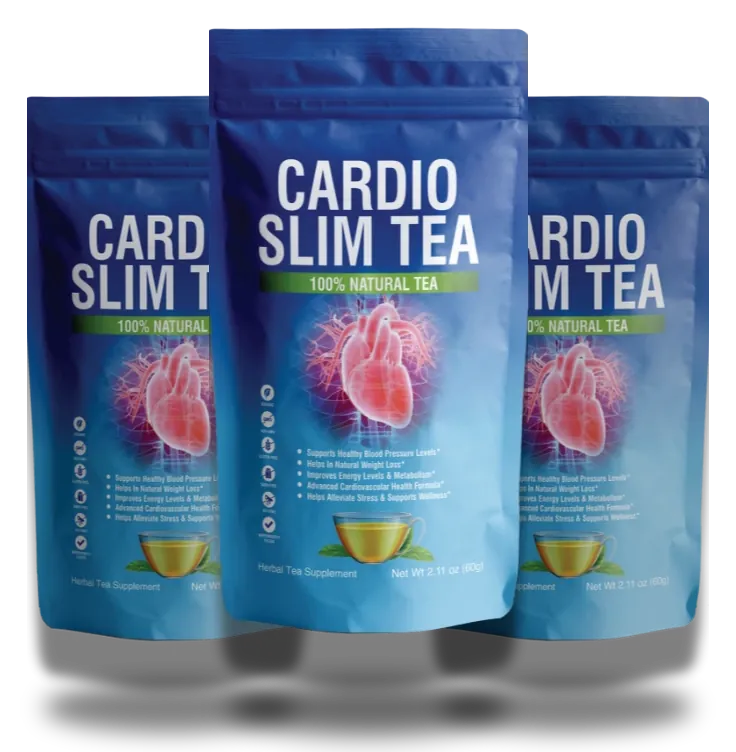
The pouch makes five claims, each marked with the FDA asterisk: blood pressure, weight, energy and metabolism, heart health, and stress. Those are structure/function claims, which a seller may print without FDA review as long as the disclaimer appears (21 CFR 101.93 - Structure/function claims). They describe a goal, not a tested result.
No published study has tested the finished tea. So the honest way to explain it is herb by herb: what each is thought to do, and how much may be in your cup.
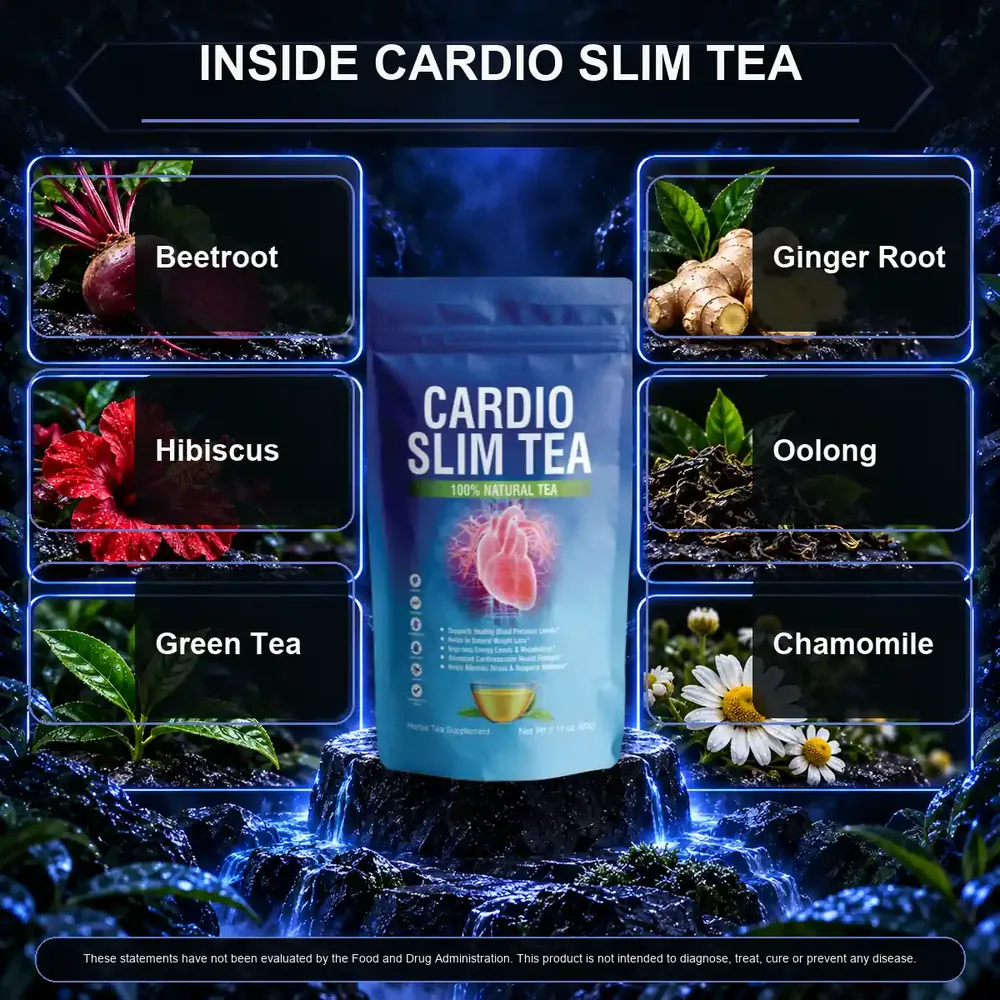
All 14 names the seller lists are on the Cardio Slim Tea ingredients page.
Four groups
Which ingredient groups are in the blend?
The 14 named herbs fall into four rough groups. Only the first two have real blood pressure research behind them.
Blood vessel herbs
Hibiscus and beetroot. Both have trials on blood pressure. Hawthorn and grape seed sit nearby with weaker or mixed results.
Tea leaves
Green tea (listed as decaf) and oolong. They supply catechins, and oolong brings some caffeine.
Comfort herbs
Ginger, chamomile, lemongrass and cinnamon. Mostly flavor and a soothing feel, with little evidence for the pouch claims.
Extras
Dandelion root, TMG, Korean ginseng and curcumin. Each is sold for its own reason, but none is shown to help at tea amounts.
Beetroot
How is beet nitrate thought to help blood vessels?
Beets are rich in nitrate. The body turns some nitrate into nitric oxide, a gas that helps blood vessel walls relax and widen.
In 16 small trials, nitrate or beet juice took about 4.4 points off systolic pressure, and the effect grew with the nitrate dose (Siervo 2013 - Nitrate/beetroot BP). A larger review of 22 trials found about 3.6 points systolic, with the best results at 500 mL of juice a day (Bahadoran 2017 - Beetroot juice BP). Those trials used roughly 316 to 860 mg of nitrate daily.
A large glass of juice holds far more beet than a pinch of powder shared with 13 other herbs. The beet share is not published, so any nitrate effect from one cup is likely small.
Hibiscus
Why does hibiscus get the most attention?
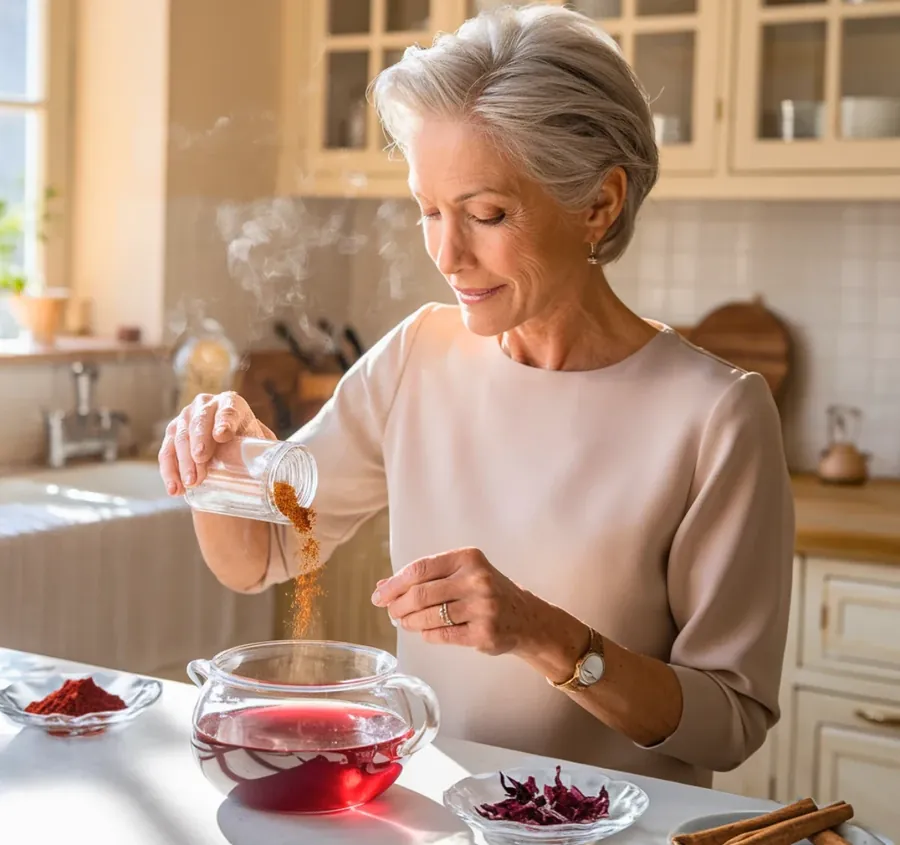
Hibiscus is the strongest single ingredient on the list. Its deep red color comes from anthocyanins, plant pigments that may help vessels relax and may act a bit like a mild water pill.
A review of 5 trials with 390 people found hibiscus cut systolic pressure by about 7.6 points and diastolic by about 3.5 (Serban 2015 - Hibiscus BP meta-analysis). A newer review of 17 trials found about 7 points systolic against placebo, with the biggest drops in people whose pressure started higher (Ellis 2021 - Hibiscus BP meta-analysis).
Results varied a lot from trial to trial, and no settled dose exists. Read more on the hibiscus page.
Green tea and oolong
What do tea catechins and caffeine actually do?
Catechins are antioxidants found in green and oolong tea. Caffeine is a mild stimulant. Together they nudge up how many calories the body burns at rest, but only a little.
In one analysis, catechin and caffeine mixes raised daily energy use by about 4.7%, roughly 100 calories (Hursel 2011 - Tea catechins and energy use). Caffeine alone did almost the same. That means most of the "metabolism" effect of tea tracks with its caffeine.
For blood pressure, 24 green tea trials found a drop of only about 1 point (Xu 2020 - Green tea BP meta-analysis). For weight, a Cochrane review found a 0.04 kg difference outside Japan, which the authors judged not clinically important (Cochrane - Green tea and weight loss).
The sales page lists the green tea as decaf. Oolong is not, so the cup has some caffeine in an unpublished amount. See the green tea and oolong page.
Cardio Slim Tea: from $49 a pouch60 g herbal tea · 2, 3 or 6 pouches · 60-day money-back guarantee
See packsDose math
How much of each herb could one cup hold?
Our arithmetic, from a 60 g pouch sold as about a month. The real split between herbs is not published.
About 2 g of tea a day must cover all 14 herbs. Spread evenly, that is about 0.14 g of each, though the true split is unknown.
Evidence at a glance
How strong is the research behind each mechanism?
| Ingredient | Proposed mechanism | What studies found | Our read |
|---|---|---|---|
| Hibiscus | Anthocyanins; vessel relaxing | About 7 points systolic across trials (Ellis 2021 - Hibiscus BP meta-analysis) | Most promising, very mixed |
| Beetroot | Nitrate to nitric oxide | About 3.6 to 4.4 points, tied to big juice doses (Bahadoran 2017 - Beetroot juice BP) | Real, but dose-bound |
| Green tea | Catechins | About 1 point on blood pressure (Xu 2020 - Green tea BP meta-analysis) | Small |
| Oolong | Catechins plus caffeine | One uncontrolled 6-week study at 8 g a day (He 2009 - Oolong tea and weight) | Weak |
| Ginger | Warming spice compounds | Effect only at 3 g a day or more (Hadi 2019 - Ginger BP meta-analysis) | Mixed |
| Grape seed | Polyphenols | Lowered diastolic, not systolic (NCCIH - Grape Seed Extract) | Mixed |
| TMG | Lowers homocysteine | Gram doses cut homocysteine; heart attacks not reduced (Cochrane - Homocysteine lowering and CVD) | Number, not outcome |
| Chamomile, lemongrass | Calm, flavor | No blood pressure or weight data in our sources (NCCIH - Chamomile) | Untested here |
The gaps
What has not been shown about Cardio Slim Tea?
Quite a lot. No trial, small or large, has tested this blend for blood pressure, weight or energy.
- No amounts. Without a Supplement Facts panel, nobody outside the maker knows how much hibiscus or beet is in a cup.
- No blend data. Herbs can add up, cancel out, or do nothing together. That has not been measured.
- No proof of the story. The sales page story about a large average drop in pressure cites no study (Cardio Slim Tea sales page). The FTC says personal stories are never enough to back a health claim (FTC - Health Products Compliance Guidance).
The claims vs evidence page weighs each pouch claim against these gaps. Diet changes like DASH did more in trials than any herb here (Appel 1997 - DASH trial).
Keep taking prescribed medicine; never stop it because of a tea (AHA - Types of BP medications). Hibiscus and beet may add to blood pressure drugs, so tell your doctor before you start.
Bottom line
How it works, in one minute
Nitrate and hibiscus target vessels, catechins and caffeine target energy use, and the rest add calm and taste. The blend is untested and its doses are hidden, so treat it as a pleasant tea with unproven promise.
FAQ
How Cardio Slim Tea works: common questions
Does Cardio Slim Tea really work?
Nobody knows yet, because no study has tested the finished tea. Some of its herbs, mainly hibiscus and beet, have modest blood pressure research when used alone at known doses. Cardio Slim Tea does not publish its amounts, so those results cannot be applied to a cup of it.
Does hibiscus tea lower blood pressure?
In trials, hibiscus tea took about 7 points off systolic pressure on average, with larger drops in people who started higher. The trials varied a lot and no best dose is settled. It is not a replacement for treatment, and it may add to blood pressure medicine.
How does beetroot help blood pressure?
Beets contain nitrate, which the body turns into nitric oxide, a gas that helps vessels relax. Beet juice trials found a drop of about 3 to 4 points systolic, but they used large glasses of juice. A small share of powder in tea likely gives far less nitrate.
Has Cardio Slim Tea been clinically tested?
No published clinical trial of Cardio Slim Tea exists. The sales page tells a story about a volunteer group but names no study, control group or sample size. The research on this site is about single ingredients, each tested on its own.
Why does the dose of each herb matter?
Studies found effects at specific amounts, such as 3 g of ginger or a large glass of beet juice. A 60 g pouch sold as a month gives about 2 g of tea a day for all 14 herbs together, so each share is likely far below study doses.
Who wrote this
Written and reviewed by
Pages built from the pouch, the brand graphic, the sales page and linked NIH, FDA, FTC and peer-reviewed sources.
Last updated . Read our editorial standards and how we check reviews. This website is run by an authorized U.S. retailer, not by the manufacturer. We earn money when you buy through our order links.
Keep reading
More about Cardio Slim Tea

U.S. authorized Cardio Slim Tea retailer
Ready to try Cardio Slim Tea?
Check your medicines first, then pick a pack. Bigger packs cost less per pouch, and every order has the 60-day guarantee printed on the sales page.
- Secure checkout
- 60-day money-back
- Ships from the U.S.