Blog
What is in Cardio Slim Tea? The full ingredients list for 2026
Cardio Slim Tea names 14 herbs and plant extracts. Six appear on the brand graphic: beetroot, hibiscus, green tea, ginger root, oolong and chamomile. Eight more appear only in the sales copy. No ingredient amounts are published, and the sales page says 15 herbs while naming 14. Check the back of your pouch.
Written by the Cardio Slim Tea reading deskMedically reviewed by Dr. Aimee Duffy, MD Family physician – integrative medicine founderReviewed · Updated · 8 min read
The basics
What is Cardio Slim Tea, in plain words?
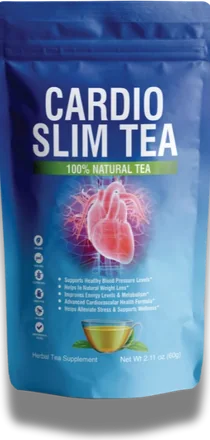
Cardio Slim Tea is an herbal tea supplement. The product is packed in a blue pouch with a zip seal, marked Net Wt 2.11 oz (60 g). The front reads CARDIO SLIM TEA and 100% NATURAL TEA, and it carries five claims with the FDA asterisk.
The sales page sells it in 2, 3 and 6 pouch packs, described as a 2-month, 3-month and 6-month supply. So one pouch is meant to last about a month.
People search for the formula of a tea like this because they want to know what they are drinking. That is a fair thing to ask. The honest answer has two halves: here are the names, and here is what the seller has not told us.
At a glance
Key facts
- Six ingredients appear on the brand graphic and the sales page: Beetroot, Hibiscus, Green Tea, Ginger Root, Oolong, Chamomile.
- Eight more are named only in the sales copy: Dandelion Root, Hawthorn Berry, Lemon Grass, TMG (Trimethylglycine), Grapeseed Extract, Korean ginseng root, Curcumin, Cinnamon Bark.
- The sales page says 15 high-quality herbs and plant extracts, but it names 14.
- No amount is published for any ingredient, and no Supplement Facts panel appears in any image we hold.
- Green tea is described as decaffeinated. Oolong is not, and no caffeine amount is published.
- The pouch holds 60 g, so the whole daily tea is about 2 g if a pouch lasts a month.
The list
Which 14 ingredients does Cardio Slim Tea name?
The names come from two places. The brand graphic called Inside Cardio Slim Tea shows six. The sales copy adds eight more. The table keeps them apart so you can see which are shown most prominently.
| Ingredient | Where it is named | One-line note from research |
|---|---|---|
| Beetroot | Graphic and sales page | Small blood pressure drop, seen with large amounts of juice |
| Hibiscus | Graphic and sales page | Best single-herb evidence here, about 7 points systolic |
| Green tea | Graphic and sales page | About 1 point on blood pressure; listed as decaf |
| Ginger root | Graphic and sales page | Blood pressure effect only at 3 g a day or more |
| Oolong | Graphic and sales page | Has caffeine; one uncontrolled 6-week study |
| Chamomile | Graphic and sales page | Not shown to lower blood pressure or weight |
| Dandelion root | Sales copy only | No compelling evidence as a water pill |
| Hawthorn berry | Sales copy only | Heart failure trials conflict |
| Lemongrass | Sales copy only | No human blood pressure or weight trial in our sources |
| TMG (betaine) | Sales copy only | Lowers homocysteine; that has not cut heart attacks |
| Grape seed extract | Sales copy only | Lowered diastolic pressure, not systolic |
| Korean ginseng root | Sales copy only | Not established for blood pressure or weight |
| Curcumin | Sales copy only | Not established for blood pressure or weight |
| Cinnamon bark | Sales copy only | No clear benefit at any dose |
The notes are about the single herb, not this tea. They are here to give a first sense, not to promise a result. Each herb has its own page, starting with the full ingredient guide.
A small mismatch
Why does the sales page say 15 herbs but name only 14?
The sales page describes the tea as made from 15 high-quality herbs and plant extracts. Count the names it prints, and you reach 14. We have no way to tell which herb is missing, or whether the number 15 is just a loose figure.
This matters for a simple reason. When a label and its own sales copy disagree on a plain count, a careful buyer should not assume the rest is exact. We list the 14 names we can see and no more.
If your pouch has a back panel, it may settle the count. Please check it, and ask the order desk if the panel and the sales page do not match.
If you want to read the real back panel yourself, the checkout shows the pack sizes and the 60-day guarantee before you pay.Prices and the 60-day guarantee are shown at checkout. We earn money when you buy through our order links.
See today's price and guaranteeWhat is missing
Does Cardio Slim Tea show an amount for each herb or a Supplement Facts panel?
No. No ingredient amount appears on the pouch front, the brand graphic or the sales page. No image we hold shows a Supplement Facts panel, a serving size or a servings count. The back of a pouch may print more, but we have no photo of it.
Supplement labels have rules. Even a blend that keeps single amounts private is expected to list a total weight and name the herbs in order of amount (21 CFR 101.36 - Proprietary blends). If your pouch has that panel, it is the most useful thing printed on the package.
A 60 g pouch that lasts a month is about 2 g of tea a day. That is our arithmetic, not a printed serving. Shared by 14 names, each herb gets a small slice. Study doses are often grams of one herb, so the research on single herbs cannot be copied onto one cup.
Diet and allergy
What about caffeine, allergens and the free-from badges?
Caffeine first. The sales page describes the green tea as decaffeinated. Oolong is a tea leaf and keeps its natural caffeine, and no caffeine figure is published. If you are sensitive, drink the tea early in the day. For most healthy adults the FDA treats up to 400 mg of caffeine a day as not linked to harm (FDA - Caffeine: how much is too much).
Allergies next. Chamomile and dandelion can trigger reactions in people allergic to ragweed or daisies (NCCIH - Chamomile). The sales page calls the tea soy-free and dairy-free. The brand artwork also shows badges for gluten free, GMO free, vegetarian and dairy free, but no test or certifier is named for any of them.
If you have celiac disease or a serious allergy, ask the order desk for written proof before you drink it. Do not rely on a badge alone.
A short routine
How can you read the ingredients on your own pouch?
Find the panel
Look for the words Supplement Facts on the back. Note the serving size and the servings per pouch.
Read the blend line
Check for a total blend weight and the order of the herbs, heaviest first.
Copy the directions
Write down the scoop size, water and steep time. Use those, not a website.
Find the maker
Look for a company name, an address and any lot or date code.
Ask a pharmacist
Take a photo of the panel if you use blood pressure, heart, clotting or diabetes medicine.
Our pouch label page types out every readable line of the front, so you can compare it with your own.
FAQ
Frequently asked questions
What exactly is in Cardio Slim Tea?
The seller names 14 herbs and plant extracts: beetroot, hibiscus, green tea, ginger root, oolong, chamomile, dandelion root, hawthorn berry, lemongrass, TMG, grape seed extract, Korean ginseng root, curcumin and cinnamon bark. No amounts are published.
How many ingredients does Cardio Slim Tea have?
The sales page says 15 herbs and plant extracts but names 14. We list the 14 we can see. A back panel on your pouch may give a firmer count, and the order desk can confirm it.
Is there a Supplement Facts panel for Cardio Slim Tea?
No image we hold shows one, and the sales page prints none. The back of the pouch may carry one. If yours does, check the serving size and any total blend weight first.
Does Cardio Slim Tea contain caffeine?
The green tea is described as decaffeinated, but oolong naturally contains caffeine. No caffeine amount is published, so a late cup could disturb sleep for some people.
Is Cardio Slim Tea gluten free or dairy free?
The sales page calls it dairy-free and soy-free, and a gluten free badge appears on the brand artwork. No test or certifier is named, so ask the order desk for written proof if you have celiac disease.
Can I check how much hibiscus is in Cardio Slim Tea?
No, the hibiscus amount is not published. The whole daily tea is about 2 g if a pouch lasts a month, shared by 14 herbs, so the trial doses of hibiscus cannot be matched to one cup.
Bottom line
Our view
Here is what we can say about the contents. The list is long, the names are ordinary tea and herb names, and some are well studied on their own. The weak spot is the hidden detail. Without amounts, nobody can compare a cup with the research or judge how much of any herb it holds.
That is common with herbal blends, but it is still a gap. We would like to see a clear Supplement Facts panel, a maker's name and a lab report. Until those appear, we treat the ingredient list as a set of names rather than a formula.
Cardio Slim Tea is not FDA approved, and no supplement is. It does not treat any disease. If you take medicine, show the list of herbs to your doctor or pharmacist before the first cup.
Last updated
Cardio Slim Tea is a 14-herb tea with hidden amounts, and the checkout shows the packs and the 60-day guarantee if you still want to try it.Prices and the 60-day guarantee are shown at checkout. We earn money when you buy through our order links.
See today's price and guaranteeLast updated . Read our editorial standards and how we check reviews. This website is run by an authorized U.S. retailer, not by the manufacturer. We earn money when you buy through our order links.